FSC/CSF PROGRAMS
Rapid Response Team
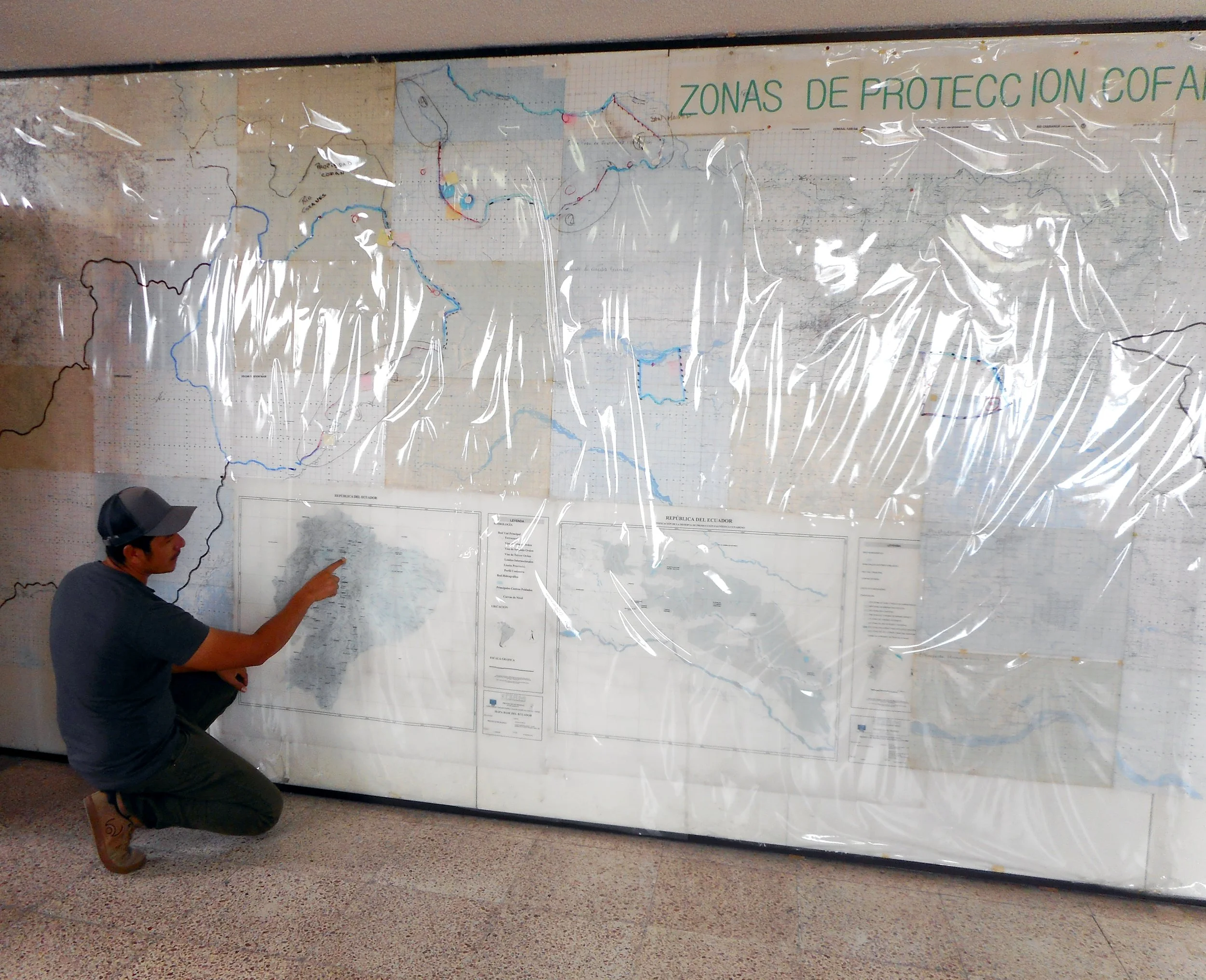
The most important FSC initiative is much more than a project—it is the concrete work the FSC does every day. Cofan leaders and allies began referring to the FSC’s core staff as the “Rapid Response Team” in 2024. Whereas many donor institutions view the salaries and ongoing expenses of nonprofit organizations as “overhead,” supporting the Rapid Response Team enables direct, near-daily actions that contribute to the health and welfare of Cofan people and territory.
As the activist force behind the FSC, the Rapid Response Team is based in Quito but makes frequent trips throughout Cofan territory. Its members include the FSC’s Executive Director, Legal Coordinator, Logistics Coordinator, and Project Manager. They do much of the basic work that keeps all nonprofit organizations afloat, but they do so much more.
In short, the Rapid Response Team maintains constant alertness to changing laws, policies, and events at national, provincial, and municipal levels to prevent incursions into the Cofan homeland; it solidifies and expands Cofan land rights; it establishes new conservation areas; it seizes on opportunities to secure governmental and nongovernmental funding for forest protection; it negotiates with primary schools, secondary schools, and universities to secure scholarships for Cofan students; it accompanies Cofan patients to doctors and hospitals to make sure they are not mistreated by an exclusionary healthcare system; and it coordinates the visits of outsiders to Cofan communities, whether they are state or NGO representatives, medical teams, scientific researchers, or allies directly involved in the operations of specific FSC projects.
Without the Rapid Response Team, none of the projects listed below would be possible.
GuardAmazonas Cofan
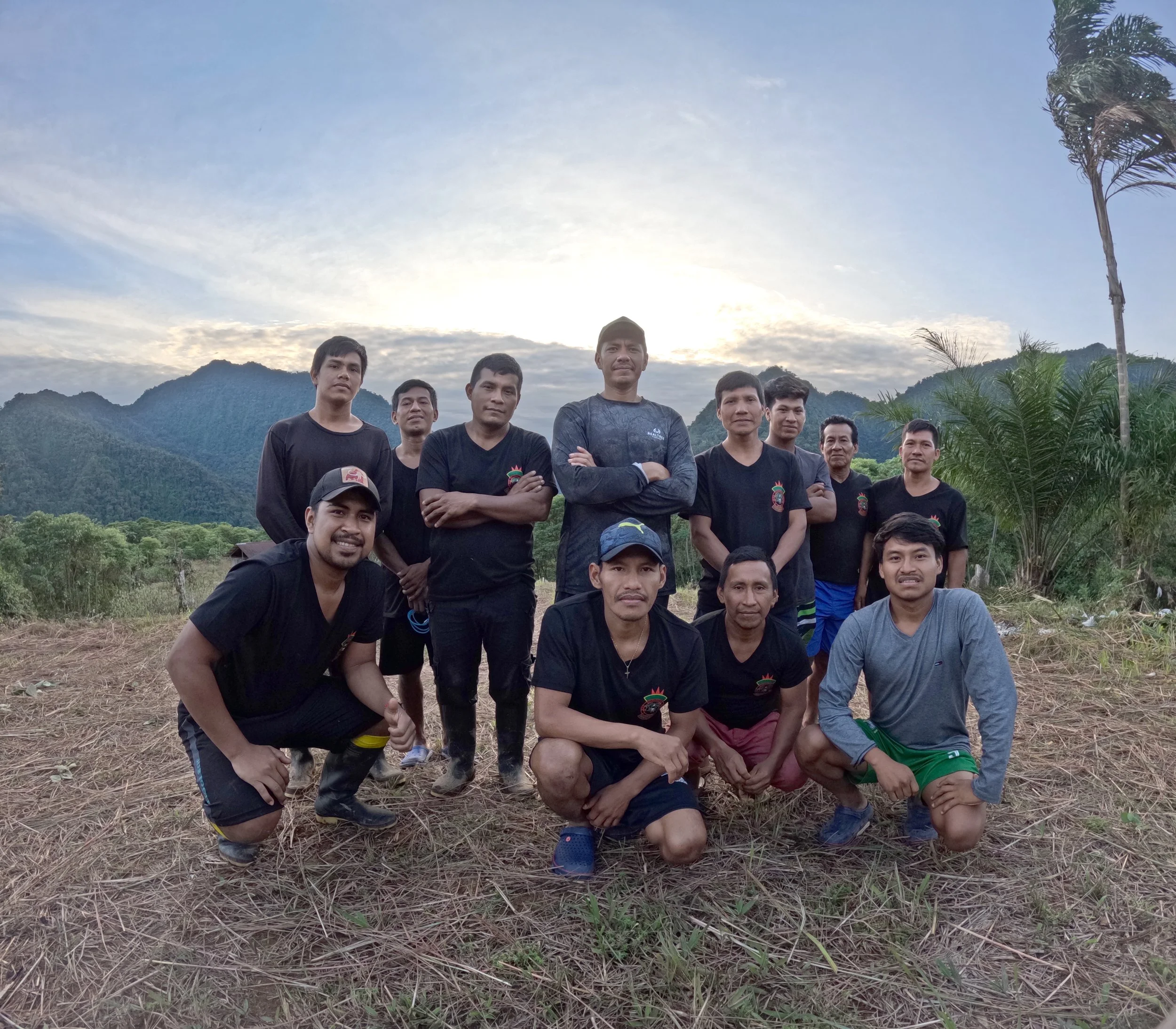
The GuardAmazonas Cofan (GC)—formerly known as the “Cofan Park Guards” or “Cofan Ranger Force”—is one of the FSC’s oldest and strongest efforts. In 2003, the FSC began sending teams of Cofans to all parts of Cofan territory to delimit, secure, monitor, and protect their homeland. In large part, it was the success of the GC that convinced Ecuador’s Ministry of Environment to more than double the Cofan’s legally recognized ancestral territory, much of which overlaps with protected natural areas. In short, the state knows its own employees cannot care for these areas, so they depend on the GC to do it.
In addition to creating and monitoring boundary trails and setting up signage for Cofan lands, the GC gathers information on current threats with the use of GPS units, drones, and other high-tech tools. With the information, GC guards sometimes confront the threats themselves, but given the dangers currently at play in some parts of Cofan territory, they more often coordinate with the police and military to deal with problems caused by illegal incursions into Cofan territory.
Nearly 50 Cofans are currently employed in the GC. With their experience, knowledge, and courage, GC patrol teams protect significant portions of Cofan territory from damage or expropriation by illegal settlers, loggers, miners, commercial hunters and fishers, and other forest destroyers. The GC work is something only Indigenous Peoples such as the Cofan can do. Carrying 100-pound backpacks in five-person teams for month-long patrols requires extreme physical fitness, deep knowledge of the forest, and a level of determination only love for one’s homeland can provide.
Additionally, the GC organizes patrol teams so they are composed of individuals from different communities and generations. Doing so ensures the transmission of ecological knowledge between individuals with different life experiences in different parts of the Cofan homeland, which stretches from the Andean foothills to the Amazonian lowlands. Even more importantly, working together in inter-community teams strengthens Cofan identity as a unified Indigenous Nation bound by a commitment to its territory.
Unlike many Indigenous territory-protection programs, the GC pays its workers. To do the job well, GC guards must be absent from their families and communities for long periods. Without a modest income, GC guards would not be able to engage in the full-time conservation activities that keep Cofan territory intact. Fortunately, the Cofan can do the work more efficiently than anyone else. As the FSC continuously states, funding the GC protects lands the whole world needs, not just the Cofan. The GC’s stewardship of the Cofan Nation’s 450,000-hectare homeland is an essential part of global climate-change-mitigation and biodiversity-protection efforts. The FSC believes GC guards deserve to be credited and paid for their work, as it represents substantial costs, risks, and hardships for them and their families.
Cofan Higher Education Project
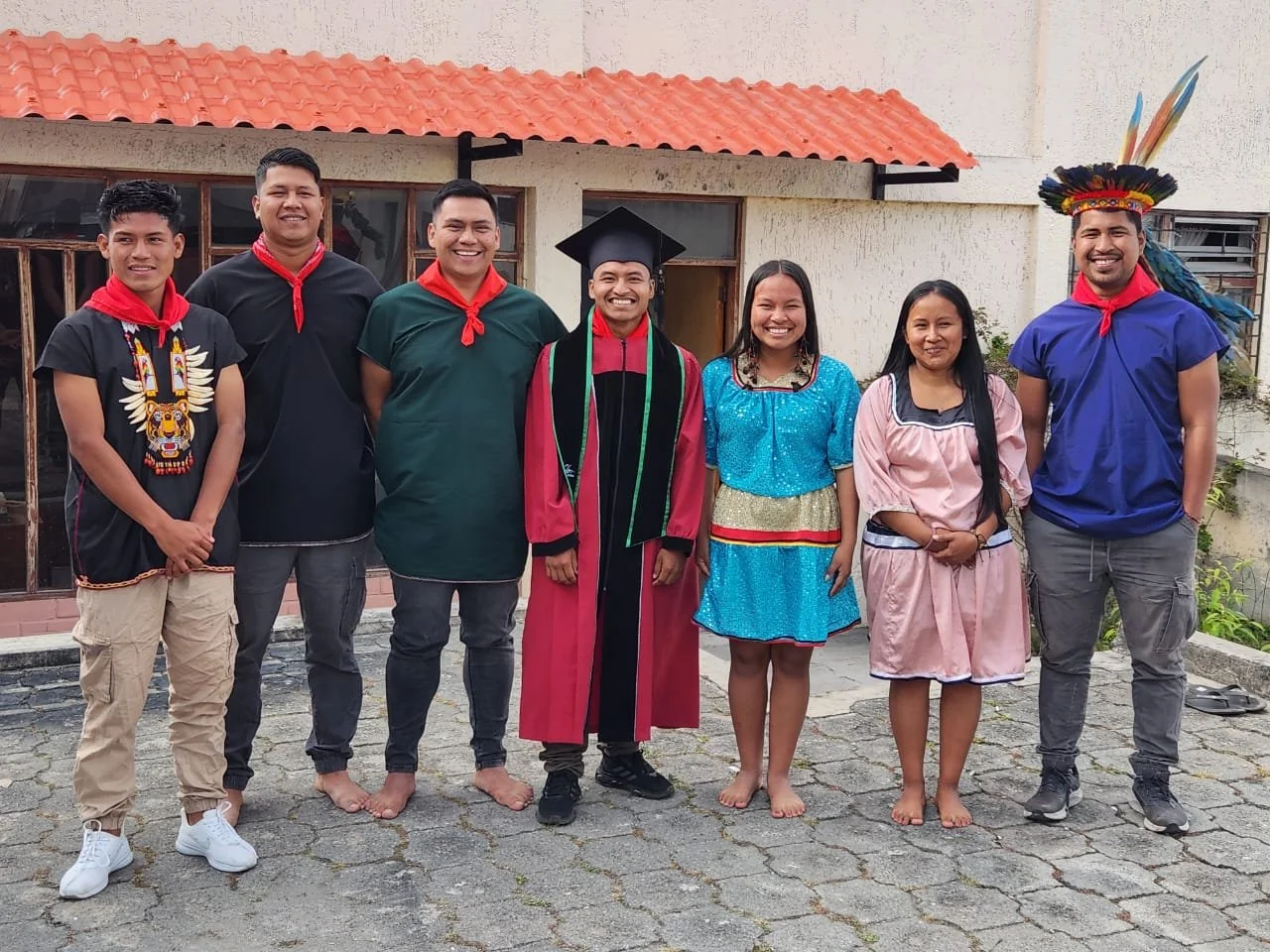
The Cofan Higher Education Project is creating a force of highly prepared, multilingual, and multicultural Cofan leaders. Earning undergraduate and graduate degrees from Ecuador’s best universities provides young Cofan men and women the knowledge, credentials, and confidence in urban settings that allow them to engage the outside world on an equal footing. Cofans no longer want to depend on non-Indigenous intermediaries with specialized knowledge—they want to master that knowledge themselves.
The Cofan Higher Education Project is based in Quito and involves education at all levels. Unlike other projects that seek to equip the youth of impoverished peoples with college degrees, the Cofan Higher Education Project does not send lone 18-year-olds to faraway cities with little or no social support. Instead, experience has taught the FSC that whole families need to participate to maintain the psychological and moral foundation Cofan students must have to succeed. While young parents are pursuing undergraduate and graduate degrees, their children are receiving primary and secondary educations in high-quality Quito schools.
All participating families live together in housing units at the FSC’s headquarters. At night and on weekends, they spend time together and replicate social life in a Cofan community, which keeps their language, culture, and identity strong. In addition, all adult students participate in the FSC’s activist work. As professors are teaching them specialized knowledge in classrooms, FSC staff are teaching them how to fight for their people and homeland in many different settings and roles. Working together on projects creates strong bonds between participants and FSC leaders. The outcome is a cohesive, intergenerational cadre of highly educated and highly committed Cofan activists. They are essential to the future of their people and homeland.
Seguro Campesino Project
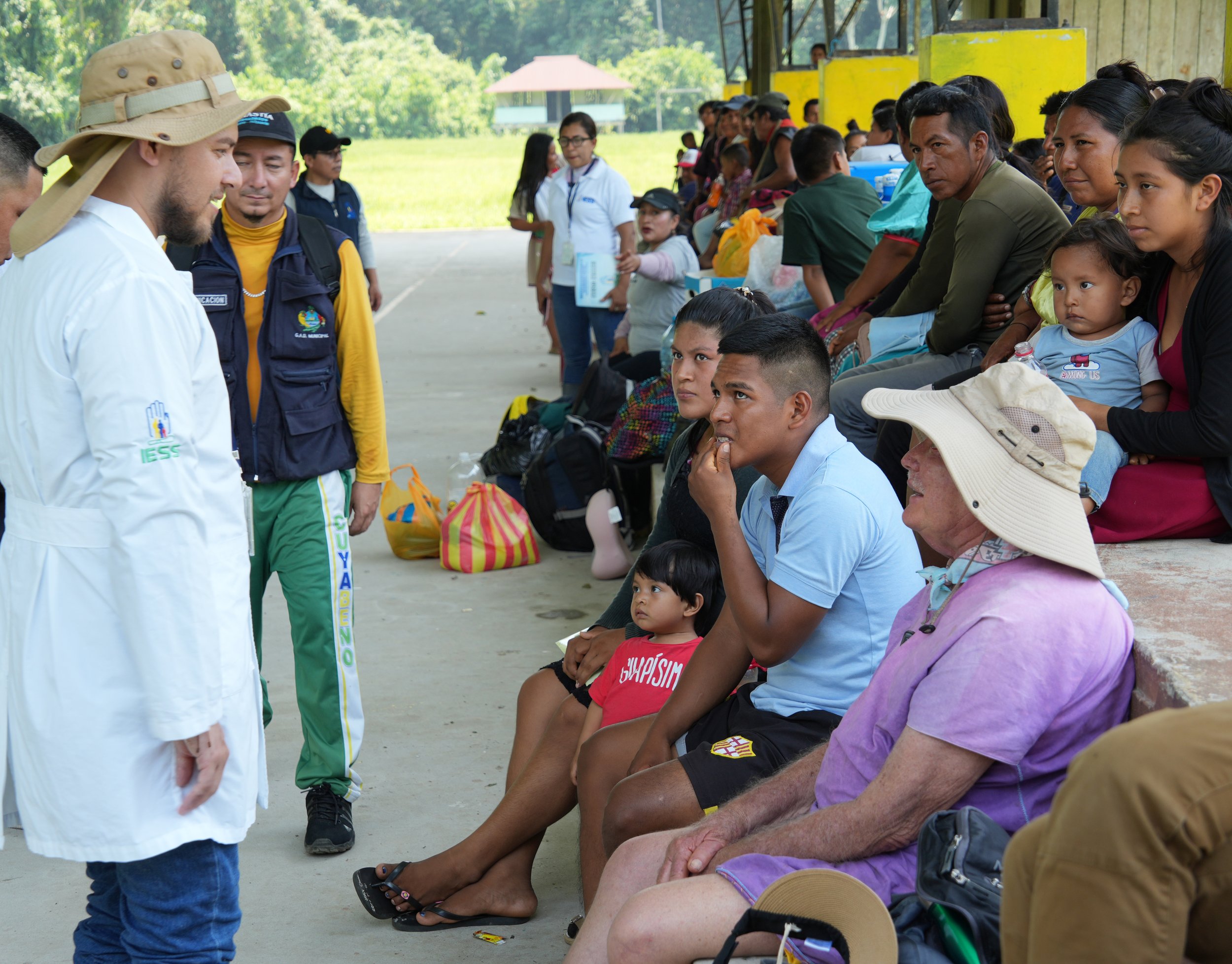
The FSC’s Seguro Campesino Project helps keep the Cofan Nation healthy as it battles diseases Cofans never knew before oil companies and settlers invaded Cofan territory. The project name refers to an Ecuadorian state program that combines U.S.-style Medicare and Social Security systems for people who live subsistence lifestyles and do not pay into social-welfare programs. The FSC provides the small annual fee for Cofan families to join and stay enrolled in the program. Just as importantly, FSC staff help Cofans navigate complex bureaucratic hurdles to obtain life-saving care. Last but not least, when enrolled Cofans become elders, the program gives them substantial Social Security payments.
In addition to offering access to high-quality medical care, the Seguro Campesino Project arranges for medical brigades to visit remote Cofan communities to provide healthcare to Cofans where they live. Traveling to outside healthcare facilities is impossible for some Cofan families, which makes the medical visits a necessity to provide care for the entire Cofan Nation.
Healthcare costs are one of the most important economic needs of Cofan families. If Cofans do not have the money for life-saving care, they can feel pressured to make choices that threaten their commitment to conserving their forest resources. The Seguro Campesino Project means they don’t have to feel that pressure. Consequently, it acts as an additional tool to protect Cofan territory.
Cultural Transmission Project
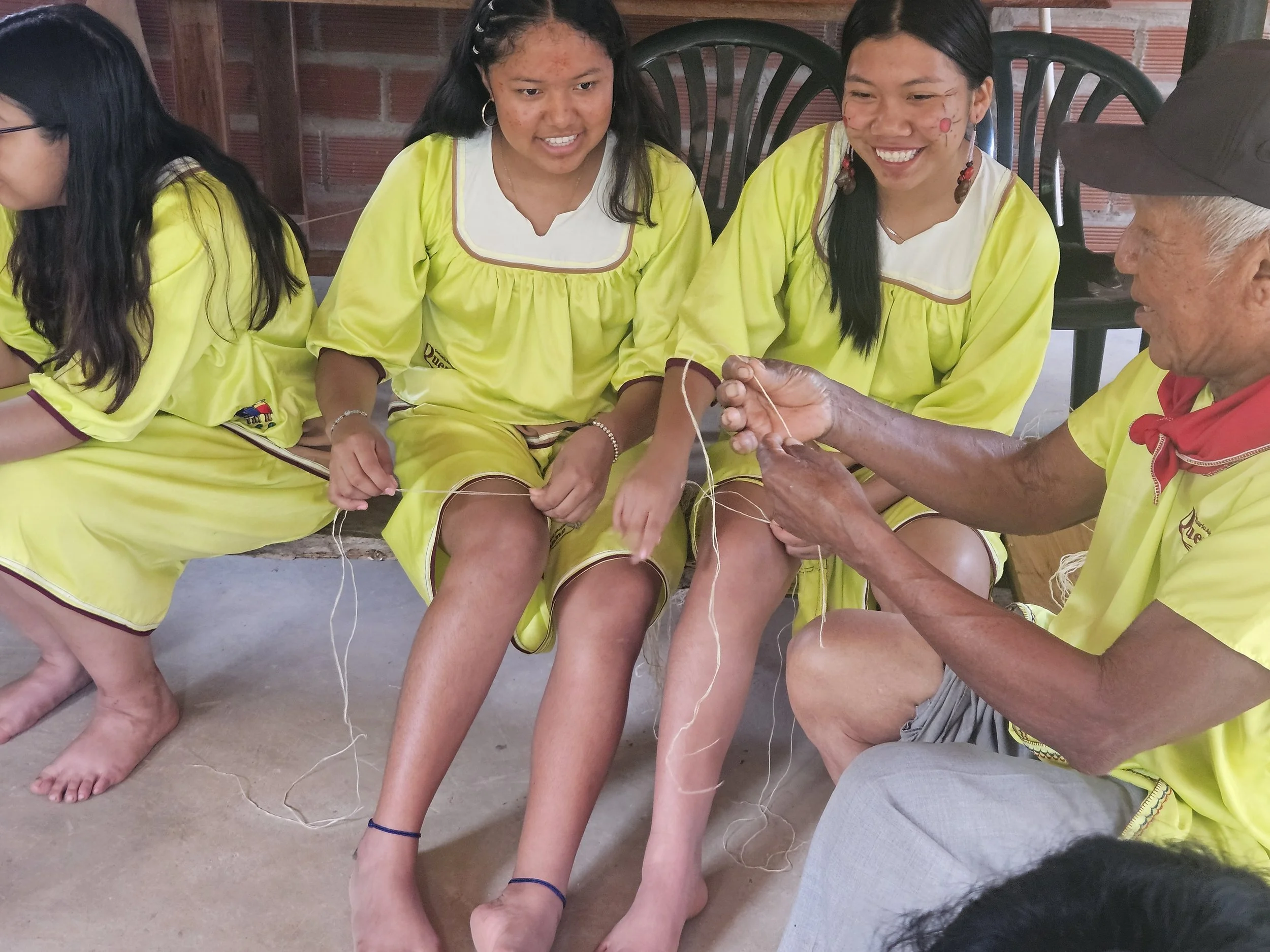
The Cultural Transmission Project is directed by a group of women from the community of Zábalo who are determined to maintain the most important elements of their people’s culture. Based on the interviews and workshops they have done with other Cofans, they are learning which forms of knowledge and customary practice are most in danger of being lost. With the information, they are documenting threatened cultural practices and creating programs to stabilize and revitalize them.
In 2026, the Cultural Transmission Project began offering a three-week summer school for young Cofans who want to be immersed in their people’s traditional ways. Additionally, the project directors are producing a “Cofan Encyclopedia” that contains information ranging from medicinal plants to gastronomic techniques to instructions for producing the everyday objects that have long been essential to Cofan life. Soon, the project directors will incorporate video to supplement their written and photographic work.
A long-term goal of the Cultural Transmission Project is to create high-quality bilingual and bicultural curricula for use in primary schools in Cofan communities. The curricula will be more than lesson plans for a few classes. Rather, they will fundamentally restructure Cofán learning and be formally approved by Ecuador’s Ministry of Education.
Lifeboat Garden Project
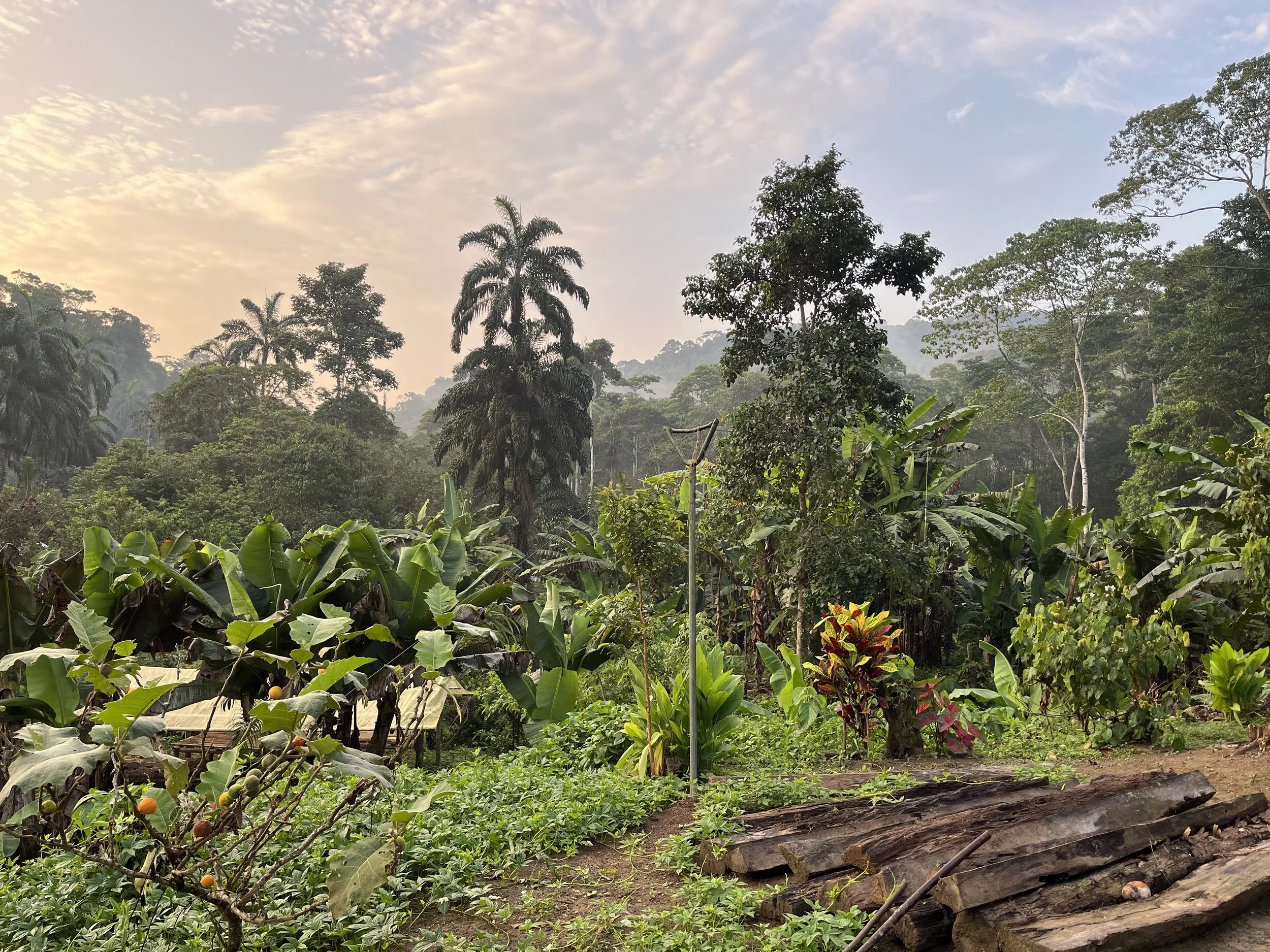
The Lifeboat Garden Project is connected to the Cultural Transmission Project, but it is its own effort as well. Climate change is impacting Cofan territory, just as it is changing landscapes around the world. Cofans began noticing that important food and medicinal-plant species were no longer as common or healthy as they once were in the areas hit hardest by scorching temperatures, dwindling rainfall, and unpredictable floods. To save these species and make them available not only to future generations but to communities that have already lost them, project leaders transport them to a parcel of upriver land to propagate them where ecological conditions are more stable.
The new site is filled with gardens containing plants essential for traditional medicine, food, handicrafts, and other goods. Cofans are also using the site to share their knowledge with outsiders, including other Indigenous Peoples and visiting ecotourists. In effect, the Lifeboat Garden Project is not just protecting Cofan plants and plant-based knowledge, it is sharing them with anyone who is interested, thereby enriching the lives of many people beyond the Cofan world.
The Lifeboat Garden Project is also set in an area with high levels of deforestation. Protecting the land is itself a direction contribution to conservation. The FSC is looking to expand the size of the site, which is not part of an official protected area. The larger it becomes, the more land it will protect and the more potential it will offer for conserving Cofan plants and engaging interested outsiders, whether they are neighboring Indigenous Peoples, researchers, or other visitors.
Solar Canoe Project
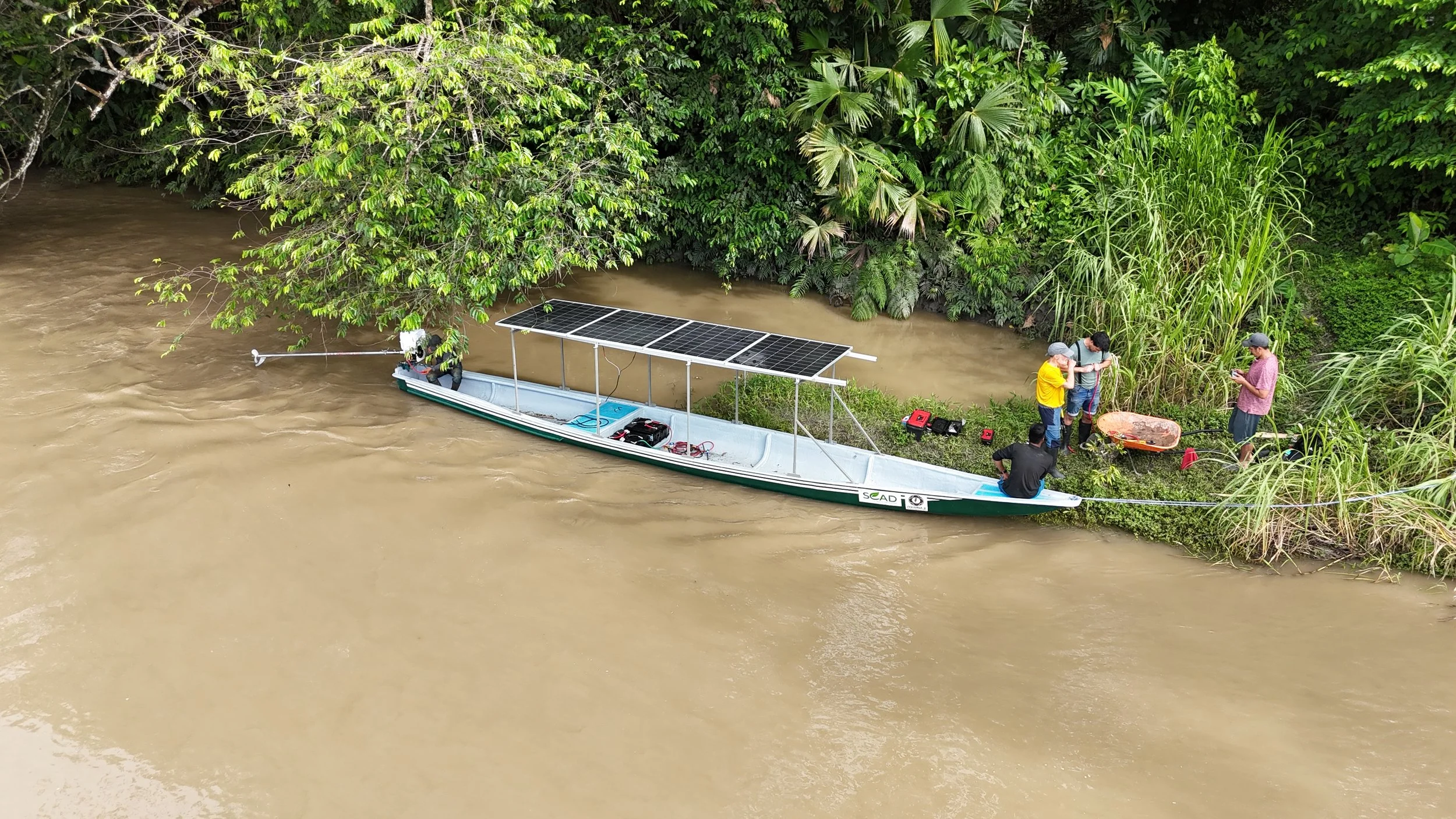
One of the FSC’s most successful initiatives was the Ecocanoa Project, which brought master fiberglass-boat makers from coastal Ecuador to teach Cofans how to construct traditional canoes with a material that performs better, lasts longer, and does not demand felling giant, endangered trees. After the Cofans learned the techniques in the early 2000s, many of them began their own businesses constructing and selling fiberglass canoes and other boats. They are now the regional masters of the trade, and their boats have traveled from Ecuador into Peru and Colombia while providing a sustainable income source for hundreds of Cofan individuals.
The Solar Canoe Project’s takes the Ecocanoa Project as a model, but it is focused on what moves the boats rather than the boats themselves. Experimenting with sophisticated batteries, charging stations, and motors, Cofans are using the Solar Canoe Project to make sure people’s main means of traveling regional waterways no longer depend on fossil fuel. The solar-powered canoes are also much quieter, which represents a great benefit for enjoying the sounds of the forest, making fishing and hunting more productive, and providing high-paying ecotourists a superior experience of the Amazonian environment.
After perfecting the system, the FSC hopes Cofans will use the skills they learned developing solar-canoe systems and begin their own businesses, just as they did following the Ecocanoa Project. The Solar Canoe Project is already of direct use for Cofans, but the goal is to transform it into a commercial opportunity that will bring sustainable, conservation-oriented income to many Cofan families and communities. Importantly, the project builds on a traditional strength of Cofan culture, as Cofans have always been experts at making the canoes that have allowed them to travel within and beyond their territory.
Ecotourism Project
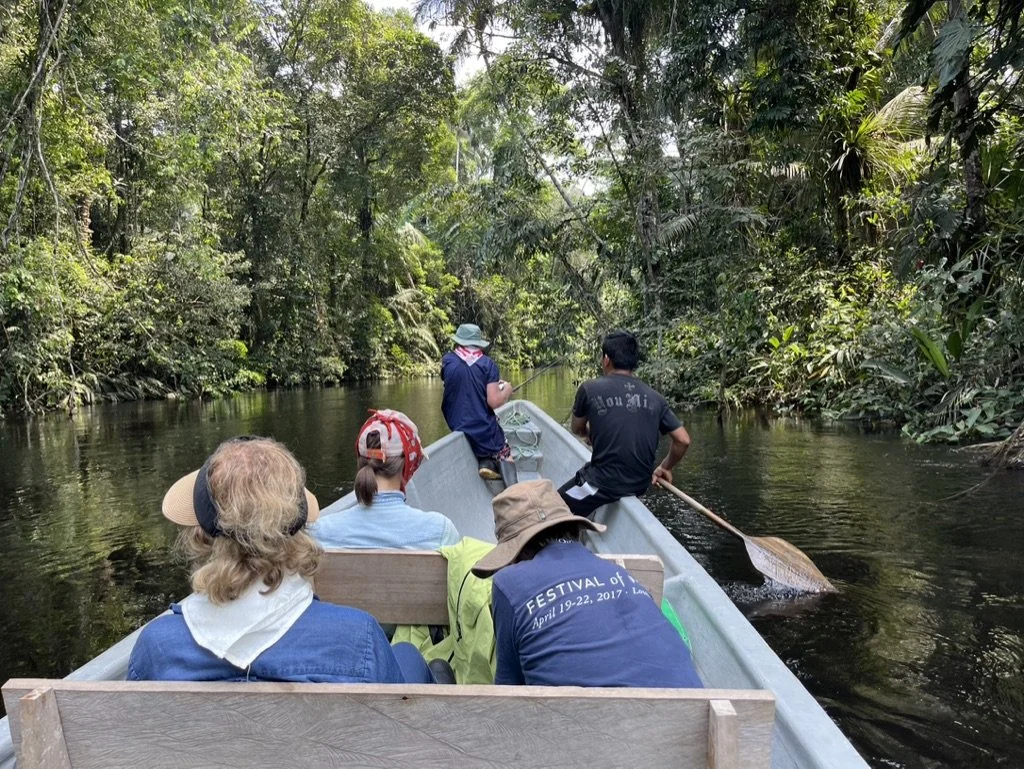
For the Cofan, ecotourism is not a project per se but a means of sustainable income-generation and so much more. In the 1970’s, FSC founder Randy Borman and his Cofan friends began bringing Western tourists from the increasingly oil-contaminated lands surrounding Dureno, the largest Cofan community, to an area far down the Aguarico River. In a few years, the new land became the community of Zábalo, whose existence has long been intertwined with tourism.
The FSC is still heavily involved in organizing environmentally oriented tourism for Zábalo and other communities. When managed collectively, ecotourism can provide enough income to meet the basic needs of a Cofan village. To be successful, however, tourism requires marketing and communication and learning how to be guides to the natural wonders of ancestral Cofan territory.
As young Cofans become increasingly interested in working as guides, they must learn the ecological knowledge of their elders and become experts at sharing that knowledge with outsiders. The most profitable forms of ecotourism require high levels of formal education. Guides and coordinators need to speak Spanish and English, and they must learn how to handle logistics and host visitors in ways that make them comfortable, secure, and happy.
Tourists on their way to such communities as Zábalo now make stops at such sites as the Lifeboat Garden Project, demonstrating how the FSC’s projects are becoming increasingly intertwined. One day, tourists will travel entirely on solar canoes. Perhaps they will make long treks to accommodations on trails established by the GuardAmazonas Cofan.
Cofan ecotourism has never involved staging rituals or dances for visitors. Rather, Cofan people position themselves as global experts in knowledge of an environment Westerners pay high prices to see and learn about. Additionally, Cofans are working to control all aspects of their ecotourism ventures, thereby earning a higher income by not losing the majority of revenue to U.S. or Ecuadorian agencies or middlemen.
Importantly, Cofan ecotourism goes beyond tourism per se. In effect, the Cofan are credentialed teachers of outside visitors, not objects of the tourist gaze. Over the decades, tourism-based encounters have created strong relationships between outsiders and Cofans. Many of the FSC’s strongest advocates began their relationships with the Cofan Nation while visiting communities such as Zábalo as tourists. Without hosting outsiders in their homeland, the Cofan would not have the global support network that makes all FSC projects possible.
Charapa (River Turtle) Project
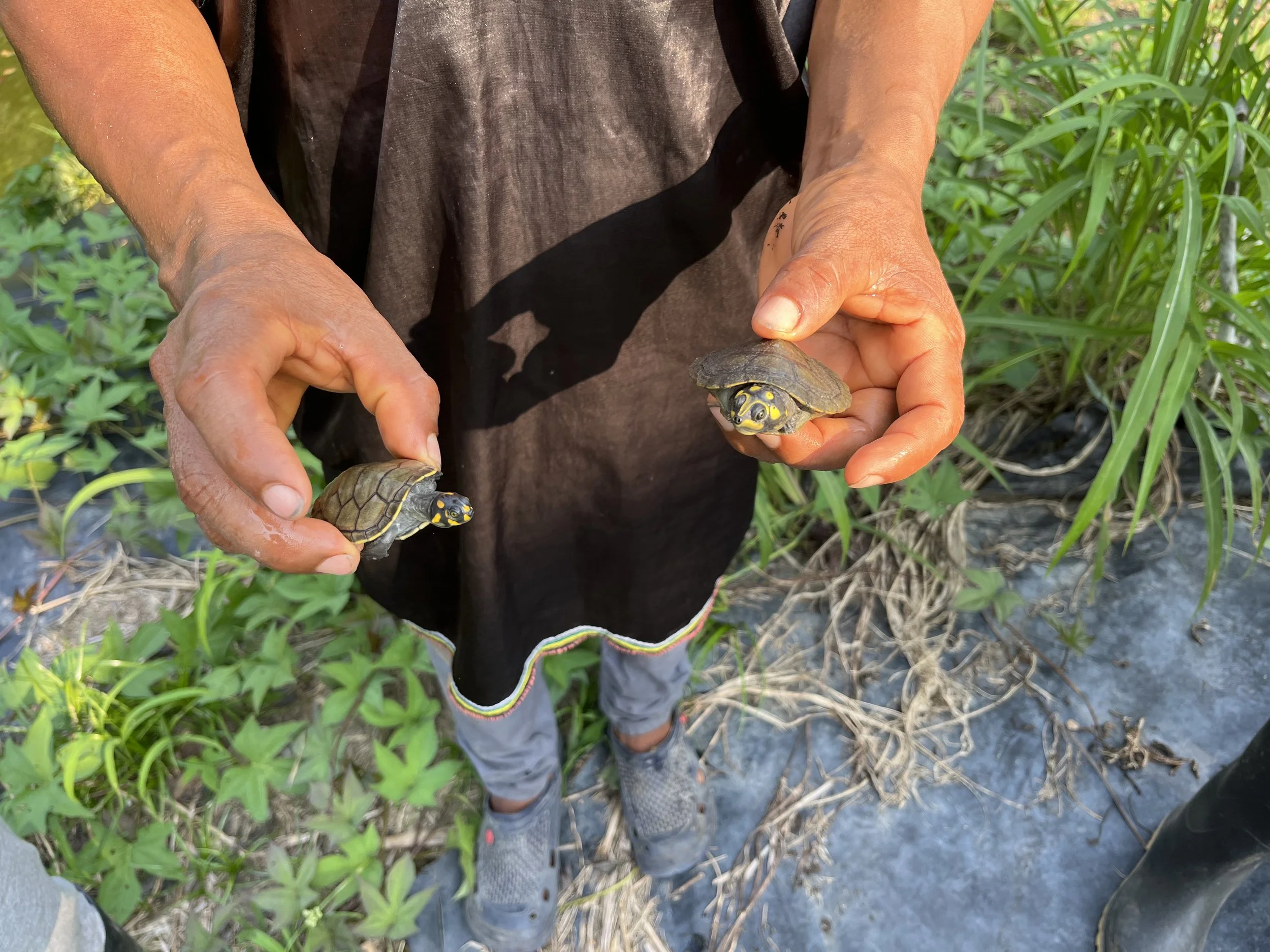
“Charapa” is the Cofan word for the Amazonian river turtle scientifically known as Podocnemis unifilis. For centuries, commercial interests collected the turtle eggs and sold them as commodities. An animal that once filled the beaches of Amazonian Ecuador had nearly disappeared when, in the 1980s, Cofans being experimenting with how to grow the turtles in protected ponds in which they could be fed. The idea was simple: if the charapas immediately enter the environment when they hatch, a huge majority are lost to predators. But with a year of growth in protected pools, the turtles’ survivorship rate skyrockets.
In communities such as Zábalo, Cofans created rules against harvesting river turtles for consumption. They also limited how many turtle eggs families can eat. Today, Zábalo families collect the majority of eggs they locate to be protected as part of the Charapa Project. Additionally, if a family has located charapa nests and the river begins to rise, they collect the eggs before they hatch and place them in artificial beaches on high ground. The additional step saves many turtles by ensuring they are not lost to floods.
Today, the success of the Charapa Project is clear for anyone to see. People who travel down the Aguarico River might encounter few or no river turtles until they enter Zábalo’s territory, in which charapas can be seen sunning themselves on nearly every log on cloudless days. The project has been scientifically studied and proven to be effective, a result that is communicated in peer-reviewed articles co-authored by Cofan community members.
The success of the Charapa Project has led Cofans to experiment on similar projects with other threatened Amazonian animals, including other reptiles, mammals, and fish. Additionally, Cofans are teaching other Indigenous Peoples to replicate the project. Finally, ecotourists love seeing the ponds filled with turtle hatchlings, and releasing them into local waterways after a year of growth is a favorite activity for all community visitors.
Cofan Vision Project
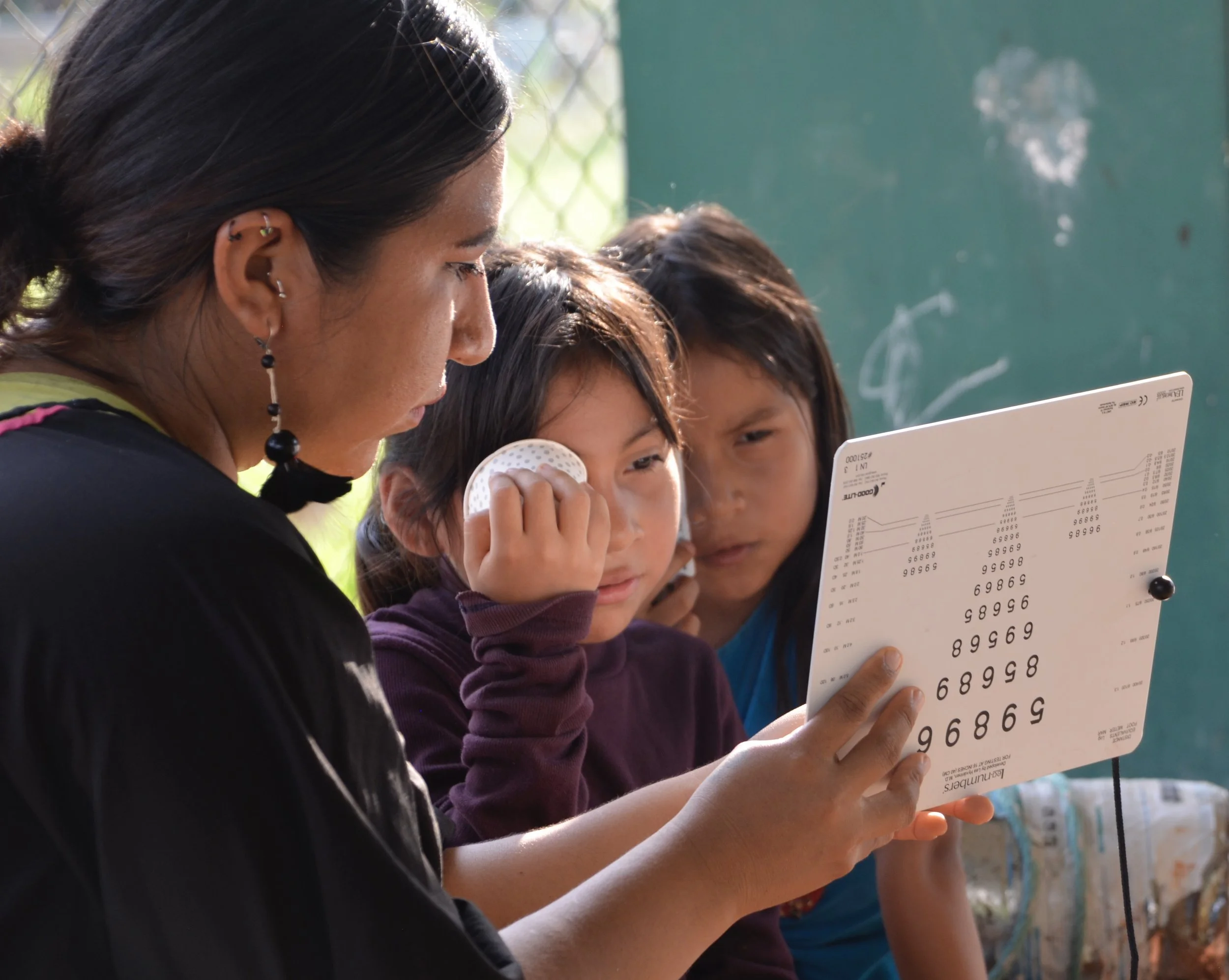
Begun in 2026 in conjunction with the Seguro Campesino Project, the Cofan Vision Project is the newest FSC effort. Headed by long-time Cofan allies, the project aims to facilitate access to medical assistance and adaptive devices for Cofans who have vision problems. Just like everyone else, some Cofans experience vision difficulties at a young age, and almost all do as they move through life. Additionally, Cofans experience extensive exposure to ultraviolet light as they spend significant time outdoors fishing and traveling on rivers. The exposure has made cataracts a widespread problem among older Cofans. A significant portion are functionally blind as a result.
Cofan villagers do not have ready access to eye specialists, and few have ever visited an eye doctor. The Cofan Vision Project focuses on screening for vision issues that can be corrected with glasses or medical interventions. Project personnel also intend to establish connections with Ecuadorian ophthalmologists and optometrists to provide corrective procedures to Cofans who need them.
Less serious vision problems can be improved quickly and directly with equipment project personnel supply. During trips to communities, project workers can distribute sunglasses, non-prescription “reader” glasses, rechargeable lamps and flashlights that help with low-light conditions, and canes for individuals who are blind or have extremely low vision.
With the aid of Cofan community representatives, the Cofan Vision Project aims to solidify and expand its efforts to ensure that the Cofan Nation does not suffer needlessly when it comes to their vision, a sense that is essential for all of us but is particularly important for individuals living in remote, rural, forested areas that offer few aids for the visually impaired.